
How Low NOx Boilers Help Meet Environmental Compliance Standards
Environmental compliance isn't getting simpler. Across Florida and nationally, NOx emission limits are tightening, inspection frameworks are expanding, and the cost of falling behind—in fines, retrofits, and operational disruption—is climbing. The Miura Boiler was engineered with this trajectory in mind, and for Florida's commercial and industrial facilities, that engineering decision has become one of the more consequential reasons to take a serious look at the platform.
This is a practical explanation of what NOx emissions are, why they matter to facility managers specifically, how boiler emission standards are evolving, and what low NOx boilers actually deliver in a real operating environment.
What NOx Emissions Are — and Why Boilers Produce Them
NOx is a shorthand term for nitrogen oxides — primarily nitric oxide (NO) and nitrogen dioxide (NO₂) — produced during high-temperature combustion processes. Boilers produce them because combustion at high temperatures causes nitrogen in the air to react with oxygen. The hotter the combustion zone, the more NOx gets generated.
It's a chemistry problem built into the nature of combustion itself. You can't eliminate it simply by burning cleaner fuel or running the equipment more carefully. The way combustion happens — the temperature profile, the mixing of air and fuel, the residence time of gases in the combustion zone — determines how much NOx comes out the stack.
This is why boiler emission standards focus specifically on combustion design rather than just fuel type. A boiler burning natural gas can still produce excessive NOx if the combustion architecture isn't engineered to control it. And this is exactly where older boiler technology tends to fall short as regulatory thresholds tighten.
How Boiler Emission Standards Have Evolved
Federal and state air quality regulations governing NOx emissions from commercial and industrial boilers have been tightening steadily for decades, driven by Clean Air Act frameworks and state-level implementation rules. Florida facilities operate under both federal EPA requirements and Florida Department of Environmental Protection (FDEP) regulations, which set limits on NOx output based on boiler size, fuel type, and facility classification.
The practical effect for facility managers is straightforward: boiler emission standards that were acceptable five or ten years ago may not meet current thresholds, and thresholds that are currently acceptable are likely to tighten further. Facilities that are already at the margin of compliance have very little runway before they face a choice between costly retrofits or equipment replacement.
This is usually where people run into problems—not when regulations change, but years earlier, when equipment decisions were made without accounting for the regulatory direction of travel. A boiler purchased in 2010 with emissions performance that met 2010 standards may be a compliance liability today. The facilities that avoided that problem are the ones that invested in low NOx boilers before the deadline arrived.
What Makes a Boiler "Low NOx"
Low-NOx boilers reduce nitrogen oxide output through combustion design—specifically, by controlling the temperature and duration of the combustion process to limit the conditions under which NOx forms.
The primary technique is staged combustion or lean premix combustion, where fuel and air are mixed and burned in a way that avoids the temperature spikes that drive NOx formation. Some designs also recirculate exhaust gases back into the combustion zone, displacing oxygen and further reducing peak temperatures.
The Miura Boiler uses a low NOx combustion design that achieves these reductions without requiring add-on selective catalytic reduction (SCR) equipment or other post-combustion treatment systems. That distinction matters operationally. SCR systems add complexity, require chemical reagents (typically urea or ammonia), need their own maintenance programs, and introduce additional failure points. A boiler that meets NOx thresholds through combustion design alone is a fundamentally simpler system to own and operate.
For Florida facilities where maintenance bandwidth is often limited and compliance documentation is already complex, simpler is better. Every system that requires its own maintenance program and compliance record is another thing to manage. Low NOx boilers that handle emissions at the source eliminate that layer entirely.
The Miura Boiler and NOx Emissions Performance
Miura's LX-Series and EX-Series steam boilers meet stringent NOx emissions requirements — including South Coast AQMD Rule 1146.2 thresholds, which represent some of the tightest boiler emission standards in the country. For Florida facilities, meeting that standard means operating comfortably within current FDEP limits and with significant margin against anticipated future tightening.
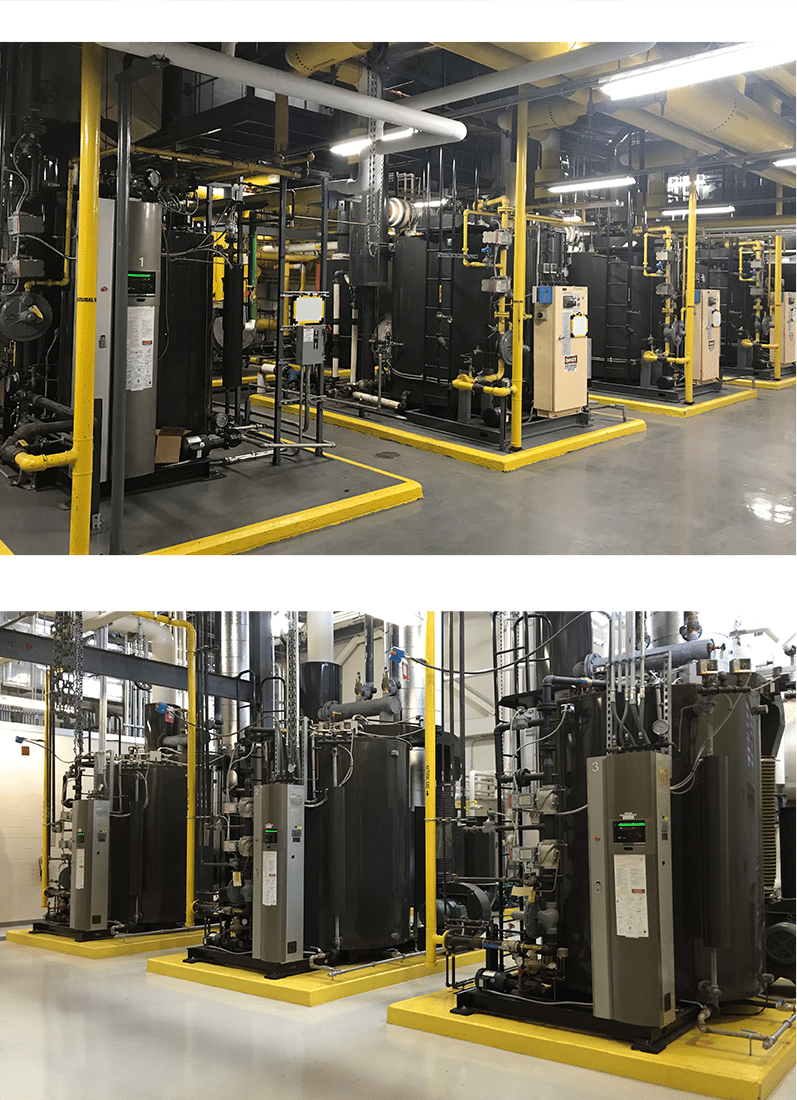
The low NOx steam boiler design integrated into Miura's platform isn't a retrofit or an upgrade option — it's built into the core combustion architecture of every unit. That means every Miura Boiler that leaves the factory is already compliant with current standards, and the combustion design that achieves that compliance doesn't require ongoing chemical inputs or supplemental equipment.
For pharmaceutical manufacturers, food processors, hospitals, and university campuses operating in Florida—facilities where regulatory compliance intersects with operating licenses, accreditation requirements, and insurance frameworks—this built-in performance is a material operational advantage. You're not managing a retrofit. You're not tracking a supplemental system's maintenance schedule. The compliance is in the equipment.
Environmental Compliance Boilers: What Florida Facilities Actually Face
Florida's regulatory environment for industrial combustion equipment has specific characteristics that facility managers need to understand. FDEP air permitting requirements apply to boilers above defined threshold capacities, with varying requirements based on fuel type, output, and facility classification. Facilities that expand capacity — by adding a boiler unit, for example — may trigger additional permitting requirements.
Environmental compliance boilers need to satisfy permit conditions at every inspection cycle, not just at initial installation. That means maintaining consistent NOx emissions performance throughout the equipment's operational life. Combustion equipment that degrades over time and starts producing higher NOx output than its initial specification represents a compliance risk that compounds with each inspection cycle.
Miura's approach to this is built into how the maintenance programs are structured. Factory-certified technicians performing Miura MIC, MMP, and MMP+ maintenance visits aren't just checking for mechanical issues — they're verifying and calibrating combustion performance against factory specifications. The equipment that was compliant at installation is maintained to stay compliant through its service life.
Boiler Technologies Unlimited provides this maintenance infrastructure for Florida facilities. Every service visit is documented to Miura's standards, which means facility managers have a clear, auditable service record demonstrating that combustion performance has been consistently maintained. For facilities facing FDEP inspections or operating under Title V permits, that documentation is part of the compliance picture.
Clean Steam Technology and Its Role in Regulated Industries
The NOx emissions story is the most visible compliance consideration for boiler operators, but it's not the only one. In pharmaceutical production, food processing, and healthcare, the quality of steam itself is subject to regulatory scrutiny—not just how the boiler produces it, but what's in it.
Clean steam technology refers to steam generation and treatment processes that produce steam free from contaminants introduced by water treatment chemicals, corrosion byproducts, or feedwater impurities. In regulated industries, steam that contacts product or product surfaces — for sterilization, cleaning, or direct process use — must meet defined purity standards.
The Miura Boiler's once-through steam generation design, combined with Miura's water treatment program infrastructure, supports clean steam production for regulated applications. The BOILERMATE® water treatment program, MW Water Softeners, and colorimetry hardness detection work together to maintain feedwater quality at the parameters Miura's system requires—which also happen to be the parameters that support clean steam output.
For pharmaceutical manufacturers operating under FDA cGMP requirements or food processors managing HACCP compliance, the intersection of boiler emission standards and steam quality standards is a real operational consideration. Equipment that addresses both through integrated design and maintenance rather than patchwork solutions is easier to manage and easier to document.
NOx Emissions Boiler Compliance: The Cost of Getting It Wrong
It's worth being direct about what non-compliance actually costs, because it shapes the return-on-investment calculation for equipment that meets current standards from day one.
NOx emissions boiler violations under Florida and federal frameworks can result in Notice of Violation (NOV) letters, administrative fines, required operational modifications, and—in serious or repeated cases—facility shutdown orders. Beyond the direct financial penalties, violations trigger enhanced regulatory scrutiny that can affect permitting timelines for other facility projects and create reputational complications with customers and insurers in regulated industries.
Retrofit solutions to bring noncompliant equipment into compliance—SCR systems, flue gas recirculation additions, and combustion control upgrades—are expensive, disruptive to install, and add ongoing operating complexity. In many cases, the total cost of retrofitting aging equipment to meet current standards approaches or exceeds the cost of replacement with equipment that was designed to meet those standards from the outset.
The facilities that are in the most difficult position are those that deferred the equipment decision, assuming their existing boilers would continue to pass inspection. Some do. Many don't, and the timeline for addressing the gap is never as long as it feels when the issue first surfaces.
Low NOx boilers acquired through a structured equipment replacement decision — with proper permitting, proper installation, and a maintenance program in place from commissioning — cost less over a ten-year horizon than the same capacity in aging equipment that requires compliance remediation along the way.
Selecting the Right Low NOx Steam Boiler for Florida Operations
Not every facility has the same compliance exposure or the same steam requirements. The right low NOx steam boiler configuration depends on output capacity needs, fuel availability, facility layout, permitting status, and operational requirements around redundancy and scalability.
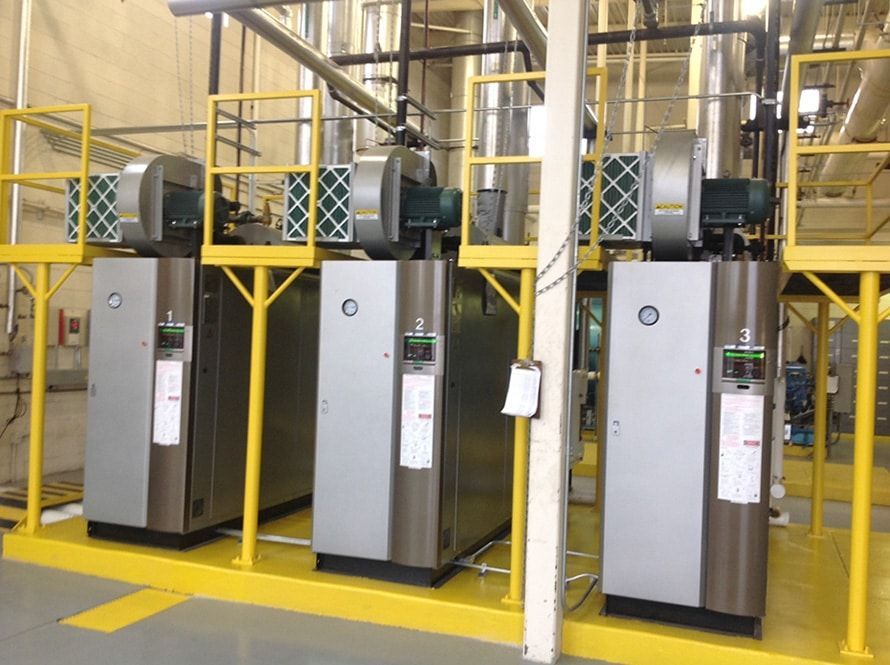
Miura's LX-Series covers natural gas applications across a wide range of output capacities. The EX-Series adds dual-fuel capability for facilities where fuel oil backup is operationally or contractually required. Both lines meet the same low NOx performance specifications. Both are available as single-unit installations or as Miura Multiple Installation System (MIS) configurations for facilities that need staged capacity or built-in redundancy.
The selection process isn't complicated, but it does require accurate information about existing facility conditions—current permit status, steam load profiles, available utilities, and mechanical room constraints. Boiler Technologies Unlimited works through that process with Florida facility managers before any equipment recommendation is made. The right system is the one that fits the specific facility, not the one that fits the most common scenario.
Conclusion
Environmental compliance requirements for commercial and industrial boilers are moving in one direction. The facilities that will navigate that trajectory most smoothly are the ones that made equipment decisions ahead of the regulatory curve rather than in response to it.
The Miura Boiler delivers NOx emissions performance that meets current standards—including some of the most stringent in the country—without supplemental treatment systems, without ongoing chemical inputs, and without the maintenance complexity that post-combustion control equipment introduces. For Florida's pharmaceutical manufacturers, food processors, hospitals, and industrial operations, that's a compliance posture that holds up over time rather than eroding with each tightening regulatory cycle.
Boiler Technologies Unlimited is Florida's factory-authorized Miura dealer and service provider. Our factory-certified technicians handle equipment selection, installation, commissioning, water treatment, and the full range of Miura structured maintenance programs. We're available 24/7 for emergency response statewide because compliance and reliability are two sides of the same operational commitment.
If your facility is facing a compliance review, evaluating equipment replacement, or simply trying to understand where your current boiler stands against current and anticipated standards, we're ready to have that conversation.