
Miura Boiler Systems Explained: Compact Design, Powerful Output
Most facility managers don't think much about their boiler until something goes wrong. That's understandable — when the system is working, it's invisible. But the Miura Boiler has a way of getting people's attention even when nothing is broken, because the design is genuinely different from what most industrial and commercial facilities have been running for decades.
This is a straightforward explanation of how Miura boiler systems work, why the engineering decisions behind them matter in practice, and what facilities in Florida actually experience after making the switch.
The Problem With Conventional Boiler Design
Before getting into what makes Miura's approach different, it's worth understanding what it's different from.
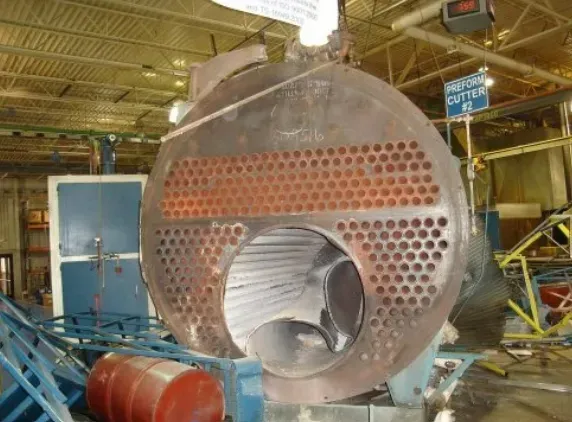
Traditional firetube boilers are large, heavy vessels filled with a significant volume of water. Heat passes through tubes submerged in that water, gradually raising the temperature until steam pressure builds. The design has been around for well over a century. It works. But it carries some structural disadvantages that don't go away regardless of how well the equipment is maintained.
Large water volume means long startup times — often 30 minutes or more from cold to operating pressure. It means the vessel itself is physically massive, requiring substantial floor space and clearance. It means that when the boiler fails, it fails completely, because there's only one unit. And it means the system is sized for peak demand, running inefficiently during the majority of operating hours when actual steam demand is lower than that peak.
These aren't flaws introduced by poor manufacturing. They're characteristics of the design itself. Miura's engineers started from a different set of assumptions.
How Miura Watertube Boilers Work
The fundamental shift in Miura watertube boilers is the relationship between water volume and heat transfer surface.
Where a traditional firetube boiler holds a large reservoir of water and heats it from within, a watertube design circulates water through narrow tubes that are themselves surrounded by combustion gases. The surface area available for heat transfer is dramatically higher relative to the volume of water being heated. Less water to heat, more surface area to heat it with—the result is steam generation that happens in minutes rather than half an hour.
Miura's specific implementation of this principle produces full operating pressure in under five minutes from a cold start. That's not a performance spec designed to win a brochure comparison. It's an engineering outcome that changes how facilities can operate—shifting on demand, running efficiently at partial load, and responding to unexpected demand spikes without asking production teams to wait.
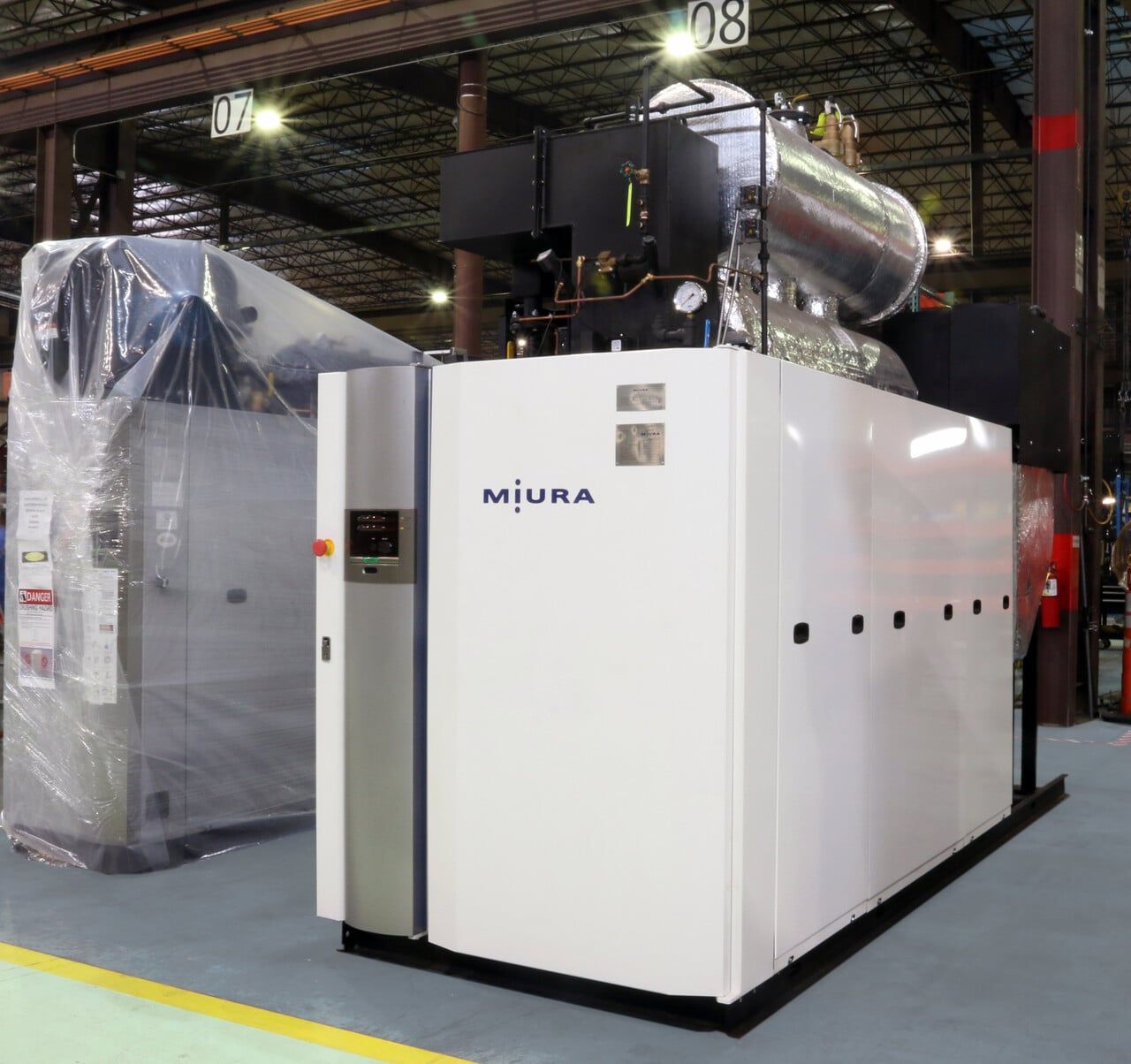
The compact industrial boilers that result from this design aren't small because Miura cut corners on capacity. They're small because the watertube architecture requires significantly less physical volume to achieve the same steam output. The footprint is a consequence of the engineering, not a compromise of it.
Miura Steam Boiler Product Lines: LX-Series and EX-Series
Boiler Technologies Unlimited carries both of Miura's primary commercial and industrial steam boiler lines. Understanding what distinguishes them helps facilities match the right equipment to their actual operating requirements.
The LX-Series: The Workhorse of Miura Steam Boiler Technology
The LX-Series is Miura's flagship gas-fired steam boiler. Available in multiple output configurations — from the LX-50 through the LX-300 — it covers a wide range of commercial and industrial steam demands. The design is characterized by its once-through steam generation, where water makes a single pass through the heat exchanger and exits as steam. No recirculation loop, no standing water reservoir waiting to be heated.
The result is a Miura steam boiler that starts fast, runs efficiently across a range of load conditions, and can be staged with additional units as demand grows. LX-Series installations in pharmaceutical plants, food processing facilities, hospitals, and university campuses across Florida demonstrate the platform's adaptability to very different operating contexts.
The LX-300 deserves specific mention for larger facilities. Its output capacity makes it viable for applications that previously would have required a traditional large-format boiler, while retaining all the modular, fast-start characteristics of the rest of the LX line.
The EX-Series: Dual-Fuel Capability in High-Efficiency Boiler Systems
The EX-Series builds on the LX platform with dual-fuel capability — natural gas and oil — giving facilities operational flexibility when fuel availability or pricing creates a need to switch. For Florida operations in areas with less reliable natural gas infrastructure, or for facilities that maintain fuel oil as a backup energy source, the EX-Series addresses a real operational requirement.
High-efficiency boiler systems in the EX line maintain the same watertube architecture and rapid-startup characteristics as the LX-Series. The core steam boiler technology is consistent across both lines; fuel flexibility is an added operational layer for facilities that need it.
The Miura Modular Boiler Approach: Multiple Units, One System
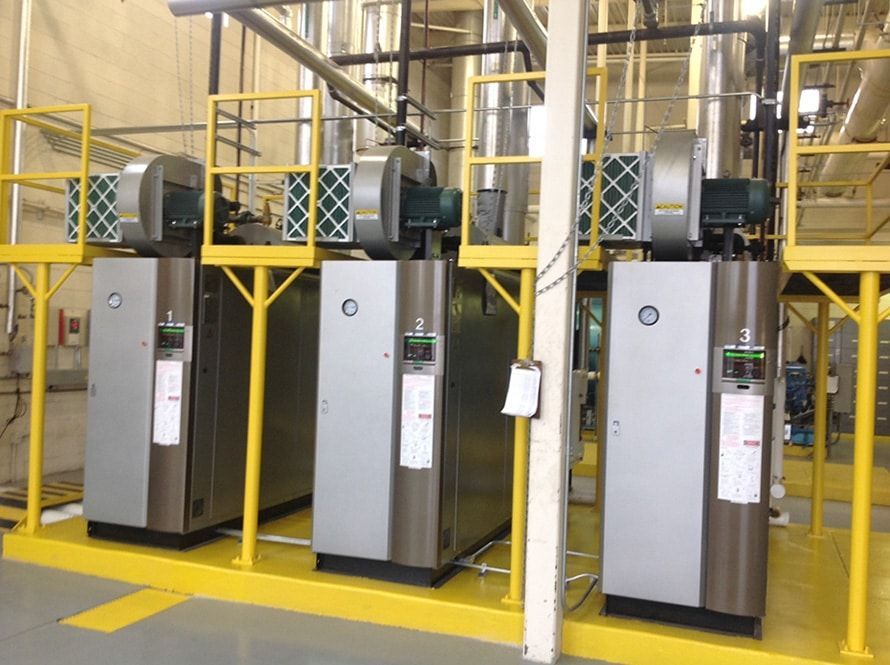
This is where Miura's design philosophy becomes most visible. A single Miura unit is capable and efficient. A Miura modular boiler installation—multiple units linked under a common control framework—is something more than the sum of its parts.
Miura's Multiple Installation System (MIS) coordinates multiple units to match steam output precisely to real-time demand. When load is low, fewer units run. As demand increases, additional units come online automatically. Steam availability tracks actual facility needs rather than running at constant output regardless of what the facility is consuming.
This is usually where people run into problems with their existing systems—the boiler runs at full output whether production is at 30% capacity or 100%, because that's what single-unit systems do. Fuel gets consumed either way. With a Miura modular boiler installation, the system only produces what the facility actually needs at any given moment.
The redundancy benefit compounds the efficiency advantage. If one unit requires maintenance or an unexpected repair, the remaining units absorb the load. No production shutdown. No emergency scramble for temporary steam supply. Just a quieter maintenance event that happens while the facility continues to operate.
For Florida facilities running continuous operations—pharmaceutical production, food processing, hospital systems, and laundry operations—that combination of efficiency and redundancy addresses two of the most persistent operational challenges simultaneously.
Compact Industrial Boilers in Real Facility Conditions
The physical footprint of a Miura installation relative to equivalent traditional equipment is one of the most immediately visible differences for facilities that have run both.
Compact industrial boilers like Miura's units don't just occupy less floor space per unit — they offer configuration flexibility that large traditional boilers can't match. Units can be arranged in a row, configured to fit within a specific mechanical room layout, or distributed across a facility where space and piping considerations allow. The installation adapts to the building's constraints rather than requiring construction or major renovation to accommodate the equipment.
For Florida's industrial facilities, many of which were built decades ago with traditional boiler rooms that weren't designed for modular equipment, this flexibility is practically significant. Upgrading without rebuilding the mechanical room is a real option with Miura's footprint. It rarely is with a direct swap to an equivalently capable traditional system.
Steam Boiler Technology and Emissions Performance
Modern regulatory requirements aren't standing still. Low NOx standards have tightened significantly in recent years and continue to evolve. Facilities running older boiler equipment face increasing pressure to either retrofit for emissions compliance or replace equipment that can't meet current or anticipated thresholds.
Miura's steam boiler technology was developed with low emissions as a design priority, not an afterthought. Both the LX-Series and EX-Series meet stringent NOx requirements without supplemental emissions control equipment. That matters for permitting, for audit documentation, and for facilities that need to stay ahead of regulatory changes rather than react to them.
For pharmaceutical manufacturers, food processors, and healthcare campuses operating under layered regulatory frameworks, having equipment that handles its own emissions compliance removes one variable from an already complex compliance picture. It's one less thing to manage, and in regulated industries, those things add up.
What Miura Boiler Systems Require: Water Treatment and Monitoring
High-efficiency watertube boilers have specific feedwater quality requirements that traditional firetube boilers tolerate more loosely. This is worth understanding before installation, not after.
Miura boiler systems require treated feedwater that meets defined hardness, conductivity, and chemical parameters. That's not a limitation unique to Miura — it's a characteristic of high-efficiency steam boiler technology generally, where tighter clearances and higher heat flux make scale and corrosion more consequential.
Boiler Technologies Unlimited provides water treatment solutions alongside Miura equipment, including the BOILERMATE® water treatment program, MW Water Softeners, and the Colormetry hardness detection system. Proper water treatment isn't optional for protecting a Miura investment — it's the foundation that allows the equipment to perform as designed over its full service life.
Miura's monitoring infrastructure adds another layer. Remote diagnostics, performance tracking, and real-time fault alerts give facility managers and service technicians visibility into system status without requiring manual inspections at every check interval. BTU's factory-certified technicians use this data to inform every service visit and catch developing issues before they become unplanned failures.
Conclusion
The Miura Boiler isn't a marginal improvement on conventional technology. It's a different engineering approach that produces different operational outcomes—faster steam, smaller footprint, better efficiency, built-in redundancy, and emissions compliance that doesn't require additional equipment.
For Florida's commercial and industrial facilities running year-round in demanding conditions, those outcomes have direct financial and operational value. Lower energy spend. Less production disruption. Simpler compliance. A steam system that can scale with the facility rather than becoming an obstacle to growth.
Boiler Technologies Unlimited is Florida's factory-authorized Miura dealer and service provider. Our factory-certified technicians handle the full scope — equipment selection, installation, commissioning, water treatment, and ongoing maintenance through Miura's structured service programs. We're available 24/7 for emergency service across the state because the commitment doesn't stop at the sale.
If you're evaluating Miura boiler systems for a new installation, a capacity expansion, or a replacement of aging equipment, let's have a real conversation about what fits your facility.