
HVAC Circulator Pumps in Tampa, FL

Commercial & Industrial Pump Products

Commercial buildings and industrial facilities throughout Tampa rely on pump systems to keep water moving through heating, cooling, and pressure networks.


Most of the time, those systems stay out of sight.

Mechanical rooms. Equipment spaces. Places people rarely walk through unless something changes.


But when circulation begins slowing down, the building usually notices before long.


Temperatures shift. Pressure readings move around. Parts of the HVAC system begin reacting in ways they normally don’t.


That’s usually where HVAC circulator pumps come back into focus.


These pumps keep water moving through large mechanical systems. Heating. Cooling. Pressure balancing. When circulation stays steady, the rest of the system tends to operate the way it was designed.


Boiler Technologies Unlimited supplies HVAC circulator pump products in Tampa, FL for commercial buildings, hospitals, universities, manufacturing facilities, hotels, and industrial operations across the Tampa Bay area.


Across Tampa, many facilities rely on Wilo pumps, a manufacturer recognized worldwide for high-efficiency pump technology used in commercial HVAC systems and industrial mechanical applications.


Boiler Technologies Unlimited serves as an authorized representative of Wilo pumps, providing pump equipment and product support for facilities throughout Tampa and surrounding Hillsborough County communities.


Learn more about Wilo pump technology:
https://wilo.com/us/en_us/

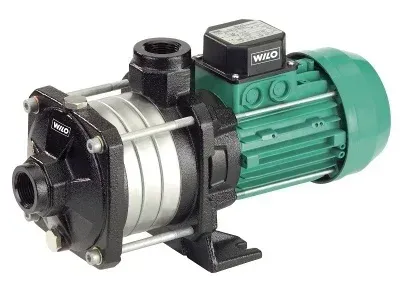
A Wilo multi-stage centrifugal water pump with a black cast iron housing and a green electric motor.

HVAC Circulator Pump Terminology

What Is an HVAC Circulator Pump? 

An HVAC circulator pump (also called a hydronic circulator, heating circulator, or recirculating pump) is a centrifugal pump that continuously moves water through a closed-loop piping system connected to a building's heating or cooling equipment.


Unlike a one-way transfer pump, a circulator pump keeps water moving in a continuous loop — drawing water from the return side of the system, pushing it through the heat source or chiller, and delivering it back through supply lines to air handlers, fan coils, radiant tubing, or other terminal units.

Key circulator pump terms used in Tampa HVAC systems:

• Hydronic System — A closed-loop heating or cooling system that uses water as the heat transfer medium instead of air


• GPM (Gallons Per Minute) — The flow rate a pump delivers; sized to match a building's heat load requirements


• Head Pressure — The resistance a pump must overcome in feet of water column; longer or more complex piping = higher head


• Variable Speed Drive (VSD) — Electronic motor control that adjusts pump speed to match real-time system demand, reducing energy use


• Delta-T — The temperature difference between supply and return water; used to calculate system efficiency


• In-Line Pump — Installs directly within a pipe run; the motor shaft aligns with the pipe


• Base-Mounted (End Suction) Pump — Mounts on a pad beside the piping; used for higher flow commercial and industrial systems


• NPSH (Net Positive Suction Head) — Minimum inlet pressure required to prevent cavitation inside the pump


• Wet Rotor Pump — A compact circulator where the rotor operates within the fluid; no shaft seal required; common in smaller hydronic systems


• ECM Motor — Electronically Commutated Motor; a high-efficiency motor type used in modern Wilo circulators

Wilo HVAC Circulator Pump Products

Spend enough time inside commercial mechanical rooms and certain equipment starts showing up regularly. Wilo pumps tend to be one of those things.


They’re designed for systems that rarely stop running. HVAC circulation loops. Industrial cooling systems. Mechanical networks that move water all day long.


Energy-efficient motor technology helps reduce electrical consumption. Durable construction allows pumps to operate through long cycles without constant attention. Pump controls help maintain stable operation even as system demand shifts throughout the day.


Hospitals, universities, hotels, manufacturing facilities, and commercial buildings across Tampa rely on Wilo circulator pumps to keep heating and cooling circulation balanced.


Most of the time, the pumps are working quietly in the background.

But when circulation starts drifting, the system usually makes it obvious.


Heating Circulation Pump Products

Heating circulation pumps move heated water through hydronic heating systems used in commercial and industrial buildings.


These systems commonly connect to:

  • Hydronic heating loops
  • Boiler heating systems
  • Radiant heating systems
  • District heating networks


When circulation slows down, heat distribution begins shifting across the building. Some areas warm up quickly. Others take longer.


This is usually where people begin looking closer at the pump system.


Wilo heating circulation pumps help maintain consistent water flow while improving energy efficiency. Stable circulation allows heating systems to operate the way they were originally designed.

Chilled Water Pump Products

Chilled water pumps move cooled water through HVAC systems used in large commercial buildings and industrial cooling operations.


These systems typically connect to:

  • Chiller plants
  • Central air-conditioning systems
  • Cooling towers
  • Industrial cooling loops


Cooling demand in Tampa rarely disappears for long. Large buildings rely on chilled water systems for extended operating hours throughout the year.


When circulation begins fluctuating, cooling performance usually follows. Temperatures drift. Air handlers start compensating.


Wilo chilled water pumps help maintain stable flow through long piping systems so HVAC equipment can maintain steady indoor conditions.

Hydronic Pump Products

Hydronic pumps move water through piping systems that distribute heat throughout a building.


Sometimes that water carries heat into the building. Other times it removes heat as part of cooling operations.

Either way, circulation keeps the system balanced.


You’ll find hydronic pump systems in the following:

  • Office buildings
  • Hotels
  • Universities
  • Hospitals
  • Large commercial properties


When flow drifts out of balance, the building usually signals it. One area may feel warmer. Another struggles to maintain temperature.


Wilo hydronic pumps help maintain steady circulation so the HVAC system continues operating smoothly.


Facilities across Tampa working with Boiler Technologies Unlimited often relies on these pumps to keep hydronic systems moving the way they should.

Booster Pump Systems

Booster pumps help maintain consistent water pressure across large buildings and extended piping systems.


As buildings grow taller or mechanical systems stretch across multiple floors, pressure loss becomes more noticeable.

That’s usually where booster systems enter the conversation.


You’ll often see booster pump systems used in the following types of buildings:

  • High-rise buildings
  • Hospitals
  • Hotels
  • Manufacturing plants
  • Large commercial facilities


Without enough pressure, water flow slows. Mechanical systems begin reacting.


Wilo booster pump systems help stabilize pressure and maintain steady water distribution throughout the building.

At Boiler Technologies Unlimited in Tampa, FL, booster systems often become part of larger HVAC and mechanical upgrades.

Domestic Hot Water Recirculation Pumps

Domestic hot water recirculation pumps keep hot water moving through a building’s plumbing system so it’s ready when needed.


Without recirculation, hot water sits in the piping network. Someone turns on the tap and waits while the system warms up.


In buildings where hot water demand stays constant—hotels, hospitals, apartment complexes, and commercial properties—that delay becomes noticeable quickly.

Domestic hot water recirculation pumps keep the system circulating, helping maintain stable temperatures while reducing water waste.


Many of these systems rely on Wilo circulator pumps designed for continuous operation.


Facilities across Tampa working with Boiler Technologies Unlimited often includes these pumps as part of larger HVAC and plumbing circulation systems.

Industrial Circulator Pump Products

Industrial environments often place heavier demand on pump systems than most commercial buildings.


Long operating cycles. Higher loads. Equipment that rarely shuts down.


Circulator pumps in these environments support water movement used for manufacturing processes, equipment cooling, and maintaining system pressure.


Common applications include:

  • Process water circulation for production equipment
  • Cooling pumps regulating machine temperatures
  • Pressure-boosting systems across industrial piping networks


Industrial systems depend on consistency. When pumps drift out of balance, production environments usually notice quickly.


Wilo industrial pump systems are built to handle these demanding conditions.
Circulator Pump Installation Guide


HVAC Circulator Pump Installation Overview for Tampa Facilities

Commercial and industrial HVAC circulator pump installation is a technical process that varies depending on pump type, system design, piping configuration, and building mechanical code requirements. The following outlines the general installation process and key considerations for facilities in Tampa, FL.


Note: All commercial HVAC pump installations in Florida must comply with the Florida Building Code (Mechanical) and be performed or supervised by a licensed mechanical contractor.


Step 1 — System Assessment and Pump Selection

Before installation begins, a qualified technician reviews the existing system to determine:

• Required flow rate (GPM) based on the building's heat load

• Total dynamic head (TDH) — the resistance the pump must overcome

• Pipe diameter and system layout (in-line vs. base-mounted configuration)

• Electrical supply available (voltage, phase, amperage)

• Variable speed drive compatibility requirements


Step 2 — Pump Positioning and Base Preparation

In-line pumps mount directly within the pipe run — the pump body becomes part of the piping system. Base-mounted pumps require a level concrete or steel pad with anchor bolt locations atching the pump's baseplate.

• Allow adequate clearance for service access (minimum 24" recommended)

• Verify alignment with supply and return piping centerlines

• For base-mounted pumps, confirm the pad is level and vibration-isolated


Step 3 — Piping Connections

Proper piping connections prevent vibration transmission, allow for thermal expansion, and simplify future maintenance:

• Install flexible connectors on suction and discharge sides to isolate vibration

• Install isolation valves on both sides to allow pump removal without draining the system

• Install a strainer on the suction side to protect the pump from debris

• Install pressure gauges on suction and discharge for performance monitoring

• Install a check valve on the discharge side to prevent backflow


Step 4 — Electrical Connection and Controls

• Connect power supply per pump nameplate and NEC requirements

• Install a dedicated disconnect switch within sight of the pump

• For variable speed pumps, install and configure the VFD or built-in drive per manufacturer specifications

• Set differential pressure setpoint for pressure-dependent systems


Step 5 — System Startup and Commissioning

• Verify system is filled and air-purged before starting the pump

• Check pump rotation direction (three-phase motors can run backwards)

• Measure actual flow (GPM) and compare to design specification

• Log suction and discharge pressures at design flow

• Verify motor amperage is within nameplate rating

• For variable speed pumps, verify speed response to system demand changes


Common Installation Issues to Avoid

• Dry running — always verify system is filled before startup; Wilo pumps have wet-rotor designs that can be damaged without water

• Air binding — install air separators and purge valves at system high points

• Cavitation — ensure NPSH available exceeds pump NPSH required; check strainer regularly

• Misalignment — for base-mounted pumps, verify coupling alignment before final startup

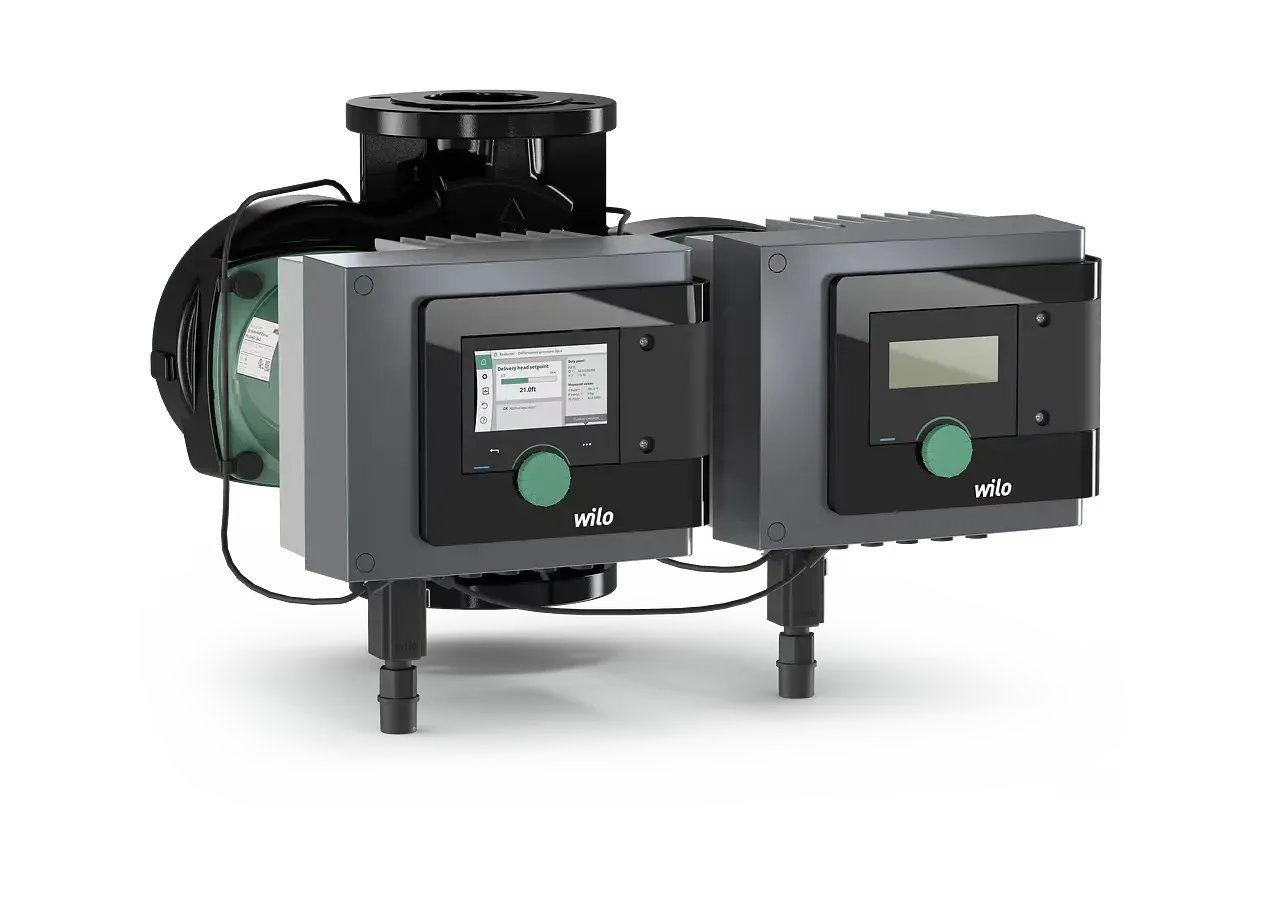
A twin-head industrial circulation pump by Wilo with dual electronic control modules, black casing, and green buttons.
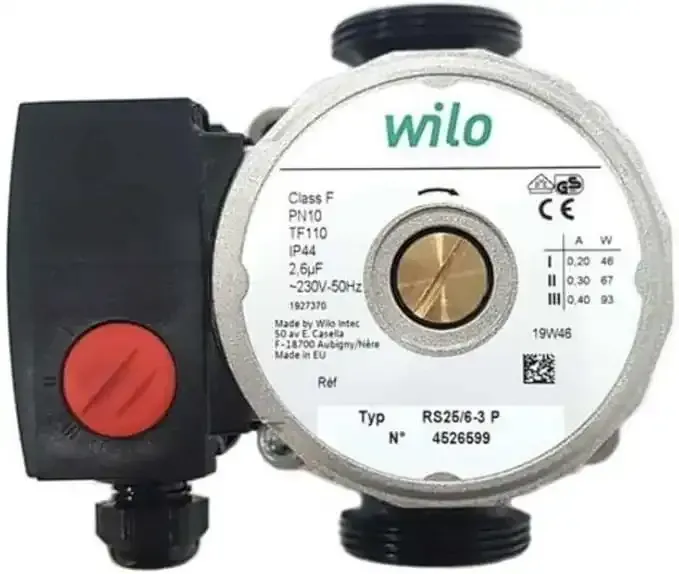
Wilo RS25/6-3 P circulation pump with a red speed selector switch, metallic housing, and technical specification label.
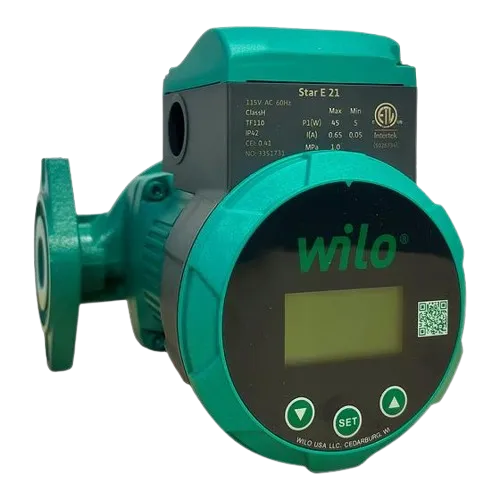
  • A green Wilo Star E 21 circulator pump with a digital display and adjustment buttons on a circular front panel.

    Slide title

    Write your caption here
    Button

Alternatives to Taco, B&G, Grundfos, and Armstrong Pumps

Many HVAC systems across Tampa were originally installed with pumps from manufacturers such as Taco, Bell & Gossett (B&G), Grundfos, and Armstrong.


Walk through enough mechanical rooms and those names appear regularly.

Over time, though, systems evolve. Pumps wear out. Facilities begin reviewing replacement options.


Some operators begin comparing alternatives while replacing Taco pumps, Bell & Gossett pumps, Grundfos pumps, or Armstrong pumps. Others are upgrading older mechanical systems to improve efficiency.


That’s where Wilo pumps often enter the discussion.


Wilo pump systems are known for energy-efficient operation, durable construction, and modern pump control technology designed for commercial HVAC systems.


At Boiler Technologies Unlimited in Tampa, FL, these replacement conversations come up regularly when facilities begin reviewing long-running mechanical equipment.

Pump Products Available in Tampa, FL

Boiler Technologies Unlimited supplies of HVAC circulator pump products in Tampa, FL designed for commercial and industrial mechanical systems.

Facilities throughout Tampa rely on different pump configurations depending on system size, building layout, and mechanical design.


Available pump products include:

  • HVAC circulator pumps
  • Heating circulation pumps
  • Chilled water pumps
  • Hydronic pumps
  • Booster pump systems
  • Domestic hot water recirculation pumps
  • Industrial pressure boosting pumps
  • In-line circulator pumps
  • Base-mounted circulator pumps


These pump systems support commercial HVAC equipment, hydronic heating systems, and industrial water circulation systems used throughout hospitals, universities, office buildings, and manufacturing facilities around Tampa.

A Wilo industrial pump unit featuring a digital display screen and a prominent green control knob against a white background.

Frequently Asked Questions

  • What is an HVAC circulator pump?

    An HVAC circulator pump moves heated or chilled water through a building’s mechanical system. The pump keeps water circulating through boilers, chillers, hydronic heating systems, and cooling equipment so temperature remains balanced throughout the building.


    These pumps are commonly used in hospitals, universities, commercial buildings, and industrial facilities where HVAC systems operate continuously.


  • What does a circulator pump do in a commercial HVAC system?

    A circulator pump keeps water moving through the piping network connected to boilers, chillers, and air handling equipment.


    Without circulation, water begins to stagnate and heating or cooling distribution becomes uneven. The pump maintains the steady flow needed for HVAC systems to function properly.


  • What are signs that an HVAC circulator pump may be failing?

    Circulator pump problems usually develop gradually.

    Common warning signs include:

    • Unusual vibration or noise
    • Reduced water flow
    • Pressure fluctuations in the system
    • Uneven heating or cooling across the building
    • Increased energy consumption from HVAC equipment

    These are often the first signals that the pump system should be inspected.


  • What is the difference between an in-line pump and a base-mounted pump?

    An in-line pump installs directly within the piping system, sitting inside the pipe run so water flows straight through the pump housing.


    A base-mounted pump installs beside the piping system on a mechanical base or foundation. These pumps are often used in larger mechanical systems requiring higher flow capacity.


    Both pump types are commonly used in commercial HVAC circulation systems.


  • Why are energy-efficient circulator pumps important?

    Most circulator pumps operate continuously as part of a building’s HVAC system.


    Over time, inefficient pumps can consume more electricity than many facilities expect.


    Modern pumps — including Wilo circulator pumps — use improved motor technology and variable speed controls to reduce energy consumption while maintaining steady system circulation.


    For large buildings, that difference can have a noticeable impact on operating costs.


HVAC Circulator Pump Products for Tampa Facilities

Contact Us

Across Tampa, FL, many buildings rely on HVAC circulator pumps to keep heating, cooling, and water circulation systems operating consistently.


When circulation stays balanced, the mechanical system usually behaves the way it should.

When it doesn’t, problems tend to appear quickly—temperature swings, uneven heating or cooling, and pressure changes.


That’s usually where people start looking at the pumps.


Boiler Technologies Unlimited in Tampa, FL supplies Wilo HVAC circulator pumps and commercial pump equipment for facilities that depend on reliable mechanical systems.


These pump systems appear in manufacturing facilities, hospitals, universities, hotels, and commercial buildings where steady water circulation quietly keeps everything moving.